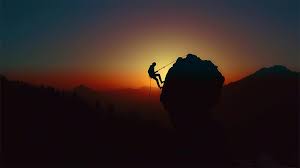
For the art of storytelling in film, the angle of a shot can be just as important as any dialogue in a video script. The angle can enhance or subliminally reinforce a scene’s emotional drive and can be used to complement the moment. The right angles can create a film’s overall feel. This creates a mood and forms a significant part of its overall identity. Please continue reading to learn about 9 common shot types and their purposes in filmmaking.
Certain shot types are essential to filmmaking and are easily recognized, even subconsciously. Others are more specific. Some directors are so skilled at certain shot techniques that their work is instantly recognizable. To get to this point, it takes practice and experience. This is possible by learning the basics.
Here are the top 9 most common shot types
The Establishing Shot
In essence, an establishing shot is a scene-setter. An establishing shot can be used to inform viewers about the current location or any changes in it at any point during a film. This shot is essential for both television and the big screen.
Friends is a sitcom that shows an exterior shot of a highrise building and then cuts to an interior shot of the cast members at their homes. You know exactly where you are in the story before you even see the living rooms. If you watch a Batman movie and it cuts to an exterior shot of a mansion, you will know that you are about to feel at home with Bruce Wayne.
As identifiers, establishing shots are used. The Empire State Building? You are in New York. Buckingham Palace? You are in London. You can refer to the establishing shot as an “extremely long shot”. To establish the location of the action, the camera is zoomed in and set back.
The Long Shot
Also known as the ‘wide shot’. Although it isn’t pulled back as much as the establishing shots, it still includes the environment in a large-scale manner. The viewers can see the surroundings more clearly because it is closer than the establishing shot. This allows the director to place a character in an environment that is natural to them or outside it.
A typical long shot shows the character in question from head to foot. However, they are not the only focus of the scene. Long shots allow you to see characters interact and the world around them, or vice versa.
Long shots show scenes like someone walking down the street to enter a shop or restaurant. These shots are often used to break up scenes. They can play an important part in a story, however. For example, in movies like Taxi Driver, they can be used to portray loneliness.
Close-Up
Close-up shots are a great way to capture emotion and intimacy. The shot will usually frame the character from their shoulders up to the top of their heads. The actor doesn’t have to say much – the close up (when used on a facial) is about capturing the expressive nuances of the character and showing viewers what they are feeling. The close-up with an actor’s face is a way to inform viewers about the significance of what’s going on at that time.
You can use close-ups in many other ways. You can think of The Silence of the Lambs, where Hannibal’s finger touches Clarice Starling’s hand: the close-up in this scene unconventionally conveys intimacy. A close-up facial shot can also show the character’s reaction, whether it is shock, horror or joy.
Extreme Close-up
Extreme close-ups can be used for many purposes. It can add weight to a scene when it is applied to a face. Zooming in on an eye to see if tear drops can be a good example.
Extreme close-ups are used to emphasize something emotionally by focusing on a specific part of an actor’s face or revealing details about something inanimate that would not be visible using any other shot.
Extreme close-ups can often be intense and difficult to see. These close-ups can cause discomfort, especially for emotionally painful scenes. Proximity to an actor’s face can create a sense of urgency and add a lot of intensity.
Directors can also use extreme close-up shots to express their creativity. These shots can show everyday details in ways that you might not expect.
This shot is versatile and can create tension or a strong atmosphere. Think of director David Fincher’s opening credits for his movie Se7en. The film’s opening credits show hundreds of images, all of which are viewed close up. They are also collaged and overlapped. This creates a specific feeling that sets the tone for the rest.
The Tracking Shot (or Dolly).
This shot is much more complex than it seems. Tracking shots track the subject’s movements using a Steadicam or a doll. It could follow an actor through a crowd or house. Or it could be used alongside a trolley in a hospital corridor or behind a car in a chase sequence.
This is an action shot that needs precision. It must be timed well and choreographed by the camera operator and the actors in the frame.
You can use tracking shots to build suspense. In horror films, a slow tracking shot may be used to show the creeping of the forest and its gradual progress toward a cabin. This creates fear in the viewers and causes them to feel on the edge of their seats.
The POV shot
It can be extremely effective to use a first-person camera shot. This allows the viewer to see the film through the eyes of one of the characters. It creates a sense of immediateness.
The ability to see something through the eyes and experiences of one of the protagonists of a film can be incredibly powerful. This camera is great for dramatic storytelling but can also be used for comedy purposes.
Peep Show is a British TV sitcom that demonstrates this. Each episode features the POVs of all characters. This helps to show how people interpret the same things as they see them.
The Crash-Zoom
Many filmmakers have their style and prefer certain angles. Some directors incorporate them in their work to create their signature shots at one point or another. Quentin Tarantino’s ‘crash zoom,’ an effect he uses in many of his films, including (and often) in Kill Bill.
Crash-zoom shots are shot when the camera moves rapidly towards its subject (usually a person’s face). The camera then follows a crooked path (the trajectory is rarely straight), and the camera abruptly stops just inches before “impact”. This is a sharp, quick shot that can be finished in less than a second but adds drama and urgency to any scene.
Although the crash-zoom effect doesn’t seem new, it has been used for decades. Tarantino uses it to great effect. It can be used in comedy and drama, too.
Pan Shot
This tripod-mounted shot shows the scene’s environment by moving left to right and right to left. You can use it to start a scene by moving left to the right through a deserted area before stopping with the characters in the frame.
It can be used in reality-based films, but it can also show alien environments in science fiction or fantasy films. Pan shots can be very dynamic and powerful, relaying a lot of environmental information to the viewers.
Side note: A tilt shot is where the camera moves similarly to a pan shot. It is a variant of the pan shot, which serves the same purpose.
The Handheld Shot
This is a simple way to film with a camera and bring the audience into the story. This style of filming is more commonly associated with documentary filmmaking. It can pull in the audience and make them feel like part of the action.
The documentary effect of the shaky camera’ is achieved by holding both hands on a camera, giving it a more real feel. This adds drama to the story and can increase the viewers’ interest.
This technique is becoming more popular in television and film. The handheld technique was used extensively in the American FX drama The Shield. It follows a group of corrupt LA police officers. The show’s gritty realism made it stand out. It gave the viewer a feeling of being present and getting caught up in the storylines. It was almost like you were being pulled along by the handheld camera rather than watching it.
Wrapping up
These are the essential shots that make filmmaking possible. These are the fundamental shots that contribute to filmmaking. Try to notice them while watching TV and films to understand how they are arranged to create narratives and how directors use them to maximize their storytelling. This list may also be helpful if you are going to film something.


