You have done extensive research on the location. You’ve taken a long walk. Heavy pro gear.
There were no waves. Strong winds blurred the ferns in the foreground. Or, the sunset was too far south.
In the last decade, I’ve developed a method to predict weather conditions and plan for them before heading out on location.
I’ve learned a lot about how to take great photos, even in epic and average conditions.
CLOUDS – From Spectacular Sunrises to Soft Forest Light
Start with the clouds. Why? Clouds control light more than the sun, which is important for landscape photography.
This is my formal response. Is there another equally valid reason? Because the clouds determine sunrise and sunset colors, spectacular skies look amazing on Instagram.
It’s easy to predict spectacular sky displays. Even if they don’t always happen. There are two components:
- Clouds above and towards the horizon
- The sun’s rays can shine through a gap in the clouds when the sun is rising or setting.
That’s it.
High wispy clouds will create pink skies. Low storm clouds create vibrant colors and moody textures.
When you have these two elements, then you are in for a real treat.
Use a free cloud tracking service, such as Windy.com, to track the movement of clouds in your area. You can track only high clouds, which are perfect for softening the light in forest scenes and abstract images with minimal elements.
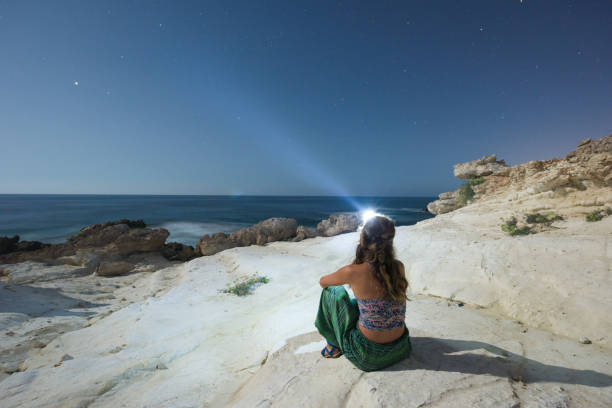
What if the sky is clear? This is perfect for astrophotography. Check the moon phase and make sure the brightness of the moon doesn’t overwhelm the starlight. You should aim for 0% to 40 percent moon fullness.
WIND: GENTLE BREEZES AND WILD GALES
Wind is the worst weather condition.
This has ruined many dark forest scenes when I needed to use a slower shutter speed. The delicate ferns that sway in the slightest wind are not aligned with this. Strong gales can also be a problem near the coast and waterfalls. They can spray water onto the lens.
Wild winds can also be beneficial.
Dunes will be sharp and shaped.
Cloud formations can be spectacular.
The waves can be a tidal wave that reaches dozens of meters, creating textures and shapes.
Wind’s unpredictability is what makes it so infuriating, yet also so grand.
Wild winds are impossible to control. You can adapt. You can use a passing gust of wind or a shape to create something truly unique.
SEASONS – COLOURS, TEXTURES AND ANGLES
When my passion for landscape photography first began in 2014, I believed that seasons in Australia were not as noticeable as those in Europe and North America.
Over the last decade, I have observed and tracked subtle changes in seasonal patterns at home.
The eucalyptus bark peels in vivid stripes and patterns every summer. Angophora costsata, also known as Sydney Red Gum, is found in the Royal National Park of NSW. The raw orange bark contrasts with an old grey-blue surface.
Every year, tree ferns produce new fronds. New fronds appear when spring arrives. During the summer, old growth turns brown and is less attractive until new growth takes over in March.
Here are some other ways that seasons can influence your landscape photography.
- Shifting Sun Angle With each passing day, the position of the sun rising or setting shifts slightly to the north or south. SunCalc and The Photographer’s Ephemeris are useful tools to align the sun to hit mountain peaks or down seascape channels.
- Variable flow: If waterfalls and streams feed by mountains, the warmer spring months will melt the winter snowpack in order to provide a stronger water flow.
- Bright growth and flowers In Australia, wildflowers like wattle or waratahs tend to bloom in the spring and summer. We can’t forget Tasmanian’s annual autumn turning of Fagus in mid-April.
- Astrophotography: The Milky Way moves in the night sky, just like the sun. The galactic core will be visible at a reasonable time after sunset between June and September.
RAIN – DREAMY WATERFALLS & VERDANT FLORA
When I think about rain, I picture lush forests and waterfalls.
Fresh drops can become powerful cascades. Winter rains can bring spring wildflowers and lush summer foliage.
Spraying water inside a canyon or steep gully can cause your lens to fog. The sheer volume of water might make the river too turbulent–distracting from the tranquil scene you were trying to convey.
I have found that waterfalls fed by rivers (rather than snowmelt) are most photogenic 2 to 3 days after heavy rain.
Rain can have a wider impact on the landscape.
A prolonged wet climate can wash soil sediments into the sea. The ocean may turn milky brown, resulting in seafoam. This bubble bath effect is either a hindrance to seascapes or can be used as a focal point.
A sudden flood followed by a long-lasting drought can cause textured cracks of mud in desert landscapes.
Fog is one of those weather conditions that are both desirable and elusive. Typically, you’ll want damp soil, cool temperatures overnight, and a gentle breeze.
The fog may only be temporary, but it can transform the scene, creating a dreamy, dreamy atmosphere that helps isolate your subject.
OCEAN – MONSTER SWELLS AND SHIFTING TIDE
The coastal environment is a dynamic one, as it constantly changes with the tides, waves, and winds.
This variability is what makes seascape photography so rewarding. You’ll see scenes of unmatched beauty and wonder when the conditions are right.
What to look for in coastal scenes
- Tide Visiting a brand new place? Check out the area during high and low tides to see how the waves and shoreline interact. High tides can cause rock channels and boulders to slither between each other, and high tides may obscure barnacles along the coastline. Low tides can result in waves that are more energetic as they crash over the seafloor.
- Swell: Big swell. Big waves. Banger shots. Please keep it safe. Massive swells can be spectacular, but they can also be dangerous. Before you rush to the beach, take a moment to look at where the waves are breaking.
- Wind: Be aware of the wind direction and speed in your area. Strong winds can flatten and dull waves, making them hardly break. If they are howling, they can send sea spray behind every wave.
FINAL THING: EXPECTATIONS ARE LOW FOR HIGH RESULTS
We tend to focus on the conditions we desire, such as a roaring waterfall or a brilliant sky.
What we expect and what happens on the ground may not always match up.
After many years of awe and disappointment, I have found that the key is to approach landscapes with no expectations.
You should also be aware of recent rain and cloud fronts. Don’t let the external factors that are out of your control dull your photography vision or potential.
Arrive at the location with accurate weather information. When you arrive, observe the scene as is and not how you would like it.
Capturing incredible conditions can be breathtaking. However, adapting even to mediocre weather conditions can result in more memorable images.