Since I started taking photos a decade back, my travels around Australia have brought me to some of the most beautiful coastal locations on this vast island. Wading in the waves at dawn is a comforting experience for me.
The Great Ocean Road, the crumbling cliffs off Queensland, and the whitest of beaches are all part of Australia’s endless seascapes. Australia’s seascape scenes continue attracting photographers from all over the world.
Let’s start with my favorite location. It’s just down the street from my childhood house. It’s also arguably Australia’s premier stretch of striking rock structures.
1. BOMBO HEADLAND QUARRY NSW
My photography journey started on the NSW South Coast, where I was raised.
What is the jewel of the South Coast? Bombo Quarry. This is a photographer’s paradise, only two hours south of Sydney. You can reach it by train.
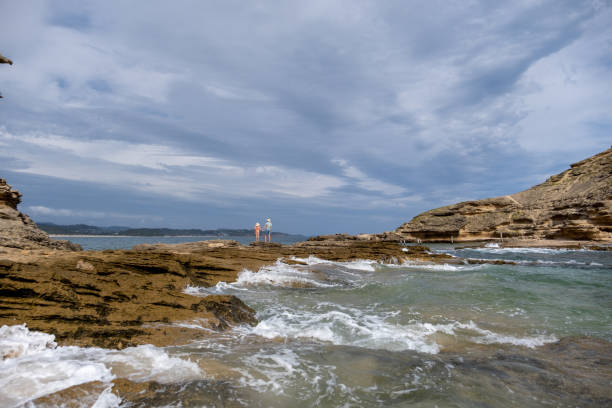
The headland, once a basalt rock quarry, is now home to castle-like structures rising from the edge of the ocean. Long-exposure photographers love the relentless waves.
The best time to capture it is at sunrise. If you’ve never been there before, plan your angles and compositions by scouting the area in the daylight. Take note of the safest places to stand, away from the waves.
If you have the time, make sure to visit Minnamurra Island or Cathedral Rocks in the north to see equally stunning seascapes.
My top tip for photography: I have written an entire guide on how to photograph Bombo Quarry. What is my top tip? My top tip?
2. CAPE WOOLAMAI VICTORIA
Cape Woolamai, which is located in Melbourne after moving from Sydney in 2017, was on my list of places to photograph and explore.
Cape Woolamai, nestled on Phillip Island, is a coastal jewel of wave-worn rocks and imposing sea stacks. The granite cliffs of Bass Strait are a striking contrast to the sapphire blue waters.
Parking at Woolamai Surf Beach, walk along the beach for about 40 minutes to Pinnacles Lookout. This is the perfect place to capture sunset seascapes as golden light bathes coasts in soft light.
Photographic tip: Bring your telephoto and be on the lookout for wildlife. You may see a few swamp wallabies or thousands of short-tailed Shearwaters returning to their nests as the sun sets.
3. ALBANY COAST (WA)
Torndirrup National Park is located in the Great Southern Region of Western Australia, not far from Albany. You’ll also find a beautiful stretch of secluded bays.
The Great Southern Ocean has smoothed the coastline over centuries, creating a tapestry of beaches with white sands and turquoise water.
You’ll find pristine beaches on over 600 km of coastline from Walpole to Esperance. My personal favorite? Salmon Beach near Albany.
Use your wide-angle lenses. To emphasize the shape of granite boulders, crouch low next to them. This will help you control framing as well as flow in your shot. Keep an eye out for any rogue waves that rush up the beach.
4. GREAT BARRIER REF, QUEENSLAND
The Seven Wonders of the World. Why was this not included?
The Great Barrier Reef, the largest coral reef in the world, stretches over 2,300 km.
From the sea, it’s spectacular. Many reefs are still suffering from pollution and coral bleaching. This is a stark warning that our natural world is in a delicate balance and requires our protection.
Treat yourself to a scenic flight if you are planning a visit. What are the top sights to see? Whitehaven Beach’s sweeping inlet and Heart Reef are picture-perfect spots.
A tip for aerial photography: Use a high shutter speed when shooting aerial photos to overcome vibrations caused by the aircraft. Try to take pictures with the sun in the background to reduce glare.
5. SAPPHIRE COAST (NSW)
The Sapphire Coast, located five hours south of Sydney, is blessed with stunning seascapes in three locations.
- Camel Rock: The rock looks (sort of) like the name when looking north. You’ll see more unique and varied compositions as you look east and southeast towards Bermagui.
- Horse Head Rock This rock is only accessible during low tide and can be difficult to reach due to its razor-sharp edges. When approached with caution, this seascape is a rewarding one to capture and experience. From the north end, explore the entire beach.
- Glasshouse Rocks Glasshouse Rocks is located near Narooma. The changing angle of the sun throughout the year creates new angles and compositions. Glasshouse Rocks is a great subject for photographing the Milky Way, especially from May to September.
Tip for photographers: Check out the tides first. Horsehead Rock is only accessible at low tide, and even then, you’ll have to scramble across jagged rocks. Camel Rock will be more active with higher tides.
6. BAY OF FIRE, TASMANIA
You’ve heard it before. You’re right.
The Bay of Fires is a stunning sight, but what really makes it so special is the color palette. Vibrant orange lichen against cool blue waters.
Binnalong Bay is a good place to start and then head north to The Gardens. Explore the hidden coves and search for small scenes amongst the fascinating rock formations.
Photographic tip: Emphasize the contrast between colors in your photos. The warm orange light of sunrise will create a complementary color harmony between the cool blues in the shadows and the water.
7. VICTORIA’S 12 APOSTLES
The 12 Apostles are one of Australia’s most famous natural landmarks. They’re located along Victoria’s Great Ocean Road. These limestone stacks stand as a testament to the raw power of nature.
From the visitor center carpark, you can easily walk to the main lookout. Don’t forget to walk down Gibson Steps, where you can see two huge spires rising from the sea, Gog & Magog.
Visit during the golden hour in the evening, when soft, warm lights illuminate the Apostles and the crumbling coastal cliffs.
Photography tip: At sunset, the main boardwalk lookout can get crowded and cramped–particularly if you need space for tripod feet. Arrive early to choose your favorite view, then settle in and enjoy the show.
8. ZENITH BEACH NSW
The coast south of Port Stephens has a world-class coastline. Sweeping bays and coastal mountains characterize it. Zenith Beach is the best beach in Australia.
Zenith Beach is best photographed at sunrise, preferably from the southernmost end of the beach. Use foreground forms to anchor your scene and balance the imposing Tomaree Mountain, which is at the far end.
Watch the swell and the waves before you venture close to the brownish rocks. Use the cracks in the rocks to guide viewers towards the sunrise.
Photographic tip: Do not overlook the Tomaree Head Track that leads to the summit of Tomaree Mountain. The view will be stunning.
EIGHT SPOTS DONE, HUNDREDS TO EXPLORE
Australia has over 30,000 km of coastline. Countless beautiful seascapes in Australia weren’t included here. Check out these sites for inspiration.
- Sugarloaf Rock in Western Australia: An imposing island and rugged coast set on the Indian Ocean three hours away from Perth.
- Wilsons Promontory in Victoria: Similar to Albany, with giant coastal hills and granite boulders found on the other end of the country.
- Hyams Beach in NSW: The whitest sand on earth. Jervis Bay has become a popular Instagram spot, and it’s easy to see why.
- Tasman Peninsula, Tasmania: Don’t forget to visit Cape Huay and Tasman Island. The peninsula looks like the Great Barrier Reef from the air.
A final note: Seascapes are rough and raw. With jagged stones. With crashing waves. Slippery boulders. And cliffs that are exposed. They are also dangerous, which is why they make for great photos.
Do the safety dance before you take the shot. Wear the right footwear, take care of wet rocks, and be aware of rogue waves.