We traveled from the modern metropolis Saigon to the UNESCO World Heritage Site Hoi An.
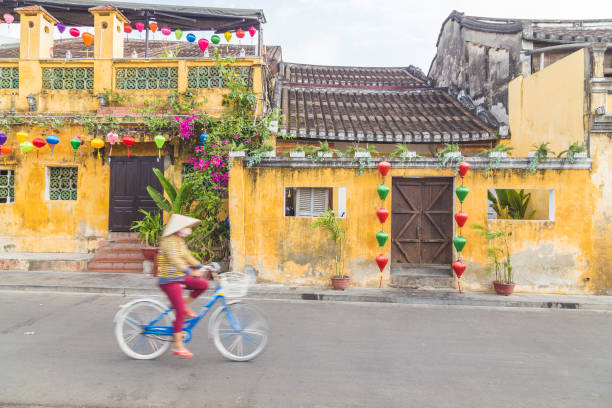
Canary yellow is painted on the narrow rows of houses in the old town and many streets around it. Everywhere you turn, there are bursts and splashes of color. The lanes are lined with blue doors. The bougainvilleas are in full bloom, and they creep up the walls.
Hoi An is reminiscent of Hollywood sets. This town is real.
Once you’ve gotten past the evening crowds of tourists, how dare they interfere with my experience? There were endless market stalls selling the latest trinkets and fried food, as well as Instagram photo opportunities under hanging lanterns.
Nestled along the banks of Thu Bon River, central Vietnam’s town became a busy port for Asian and European traders in the 15th century. Da Nang, to the north, became the center of commerce in the 18th century.
Hoi An was largely left undeveloped for over two centuries until Kazimierz Kwiatkowski, a Polish conservator, restored it in the 1990s.
Five years ago, I had visited Hoi An. Our guide led our group on a short night tour as he herded us through other groups. The town was flooded by monsoons shortly after we arrived.
The town looked stunning from what I saw. This time, I wanted to experience the city of Hoi An and not just glimpse it.
We had booked three nights at the hotel. Each day, I had a similar routine. Yet new sights and faces awaited me everywhere.
As the streets were still in shadow, I set out at dawn to explore the Ancient Town. Spotlights illuminated the walls.
Locals walked down to the Cho Hoi An Market or rode by on their bikes. The old town was free of powered vehicles. Merchants stepped out of their stores, opening their baby blue shutters to display their goods on the sidewalk.
While walking through the streets, I would spot a colorful picture frame and wait for someone to walk by. I would smile at them and ask for their portrait. These early morning hours were the best for photography.
While I walked by, I took in the sights I had searched for. Some of them were stumbled across.
The ornate Cong Chua Ba Mu Pagoda and the Fujian Assembly Hall Temple. The Japanese Covered Bridge, which dates back to 1600. The Cau An Hoi Bridge is lined with lanterns.
Soon, I would see my fellow tourists emerge to pose under bougainvilleas and explore the streets with hired bikes. With the increase in activity, there were more opportunities for street photography.
The buzz was too much.
The sun was baking everything it touched. The sun was baking everything, and it was time to retire to a café for some sugary treats. U Chi Cafe, near our hotel, made an iced coffee that was incredibly strong.
Hoi An was transformed when the sunset and I stepped out of the AC comfort.
Candles lit up the streets. Candles flickered and floated down the river. Rainbow trinkets were sold by hawkers that flew and flashed like beacons at night. Glow-in-the-dark carts offered a variety of fried treats. The sticky banana crepes are my weakness.
If you’re really lucky, you might even get rained on.
Are you lucky? You can shelter in a cafe nearby as the rest of the town leaves.
After the storm has passed, streets will be cleared. Every slickened surface sparkles with light. The lanterns multiply and reflect in the puddles of the cobbled street.
Then, I would return home and cool down before doing it all over again the following day.